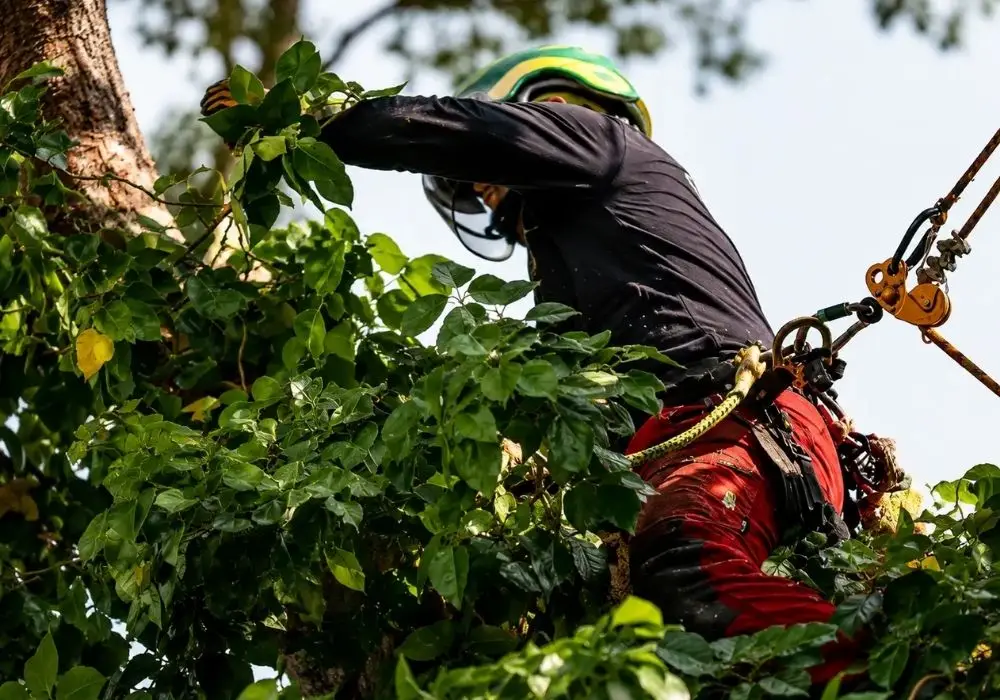
The red palm weevil (Rhynchophorus ferrugineus) is the most serious plant-health threat to the palm trees of Mallorca. Since its arrival on the island, it has destroyed thousands of palm trees right along the Balearic coast. In this guide we explain how to spot it, how to prevent it and what to do if it has already reached your palm tree.
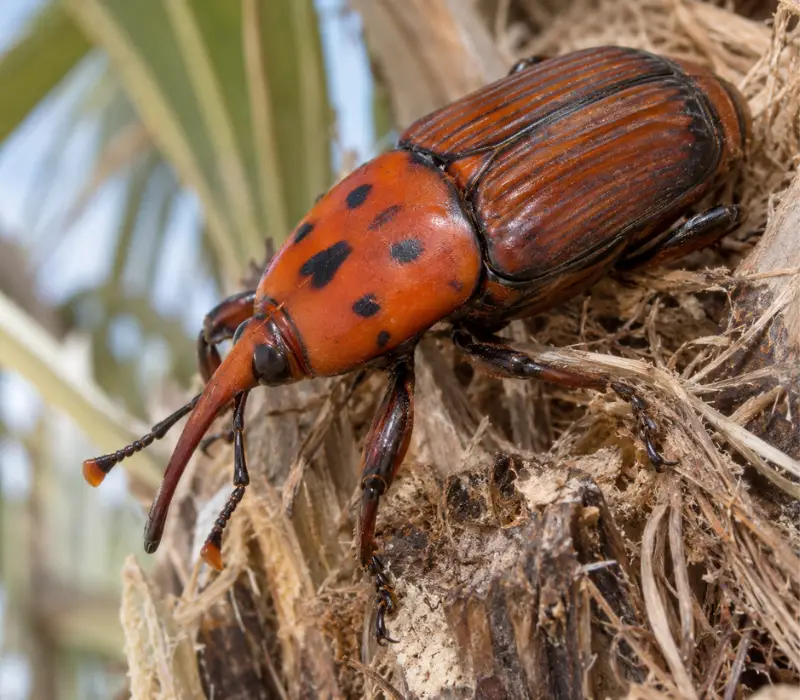
What the red palm weevil is and how it works
The red palm weevil is a beetle native to South-East Asia that has spread across the whole Mediterranean over recent decades. The female lays her eggs inside the palm tree, usually in the crown or in wounds on the trunk. The larvae develop inside, progressively destroying the tissue of the crown.
The main problem is that the damage happens from the inside out. By the time the symptoms are visible on the outside — bent central fronds, a fermenting smell, holes in the trunk — the internal damage is already considerable. That is why prevention and early detection are so important.
Red palm weevil symptoms you should know
The symptoms of the red palm weevil appear gradually:
- Early stage: slowed growth of new fronds; crown fronds that are slightly weaker or have a bent tip
- Intermediate stage: central fronds completely bent or drooping, giving the crown a "closed umbrella" look
- Advanced stage: a fermenting smell as you approach the crown, oozing on the trunk, exit holes left by the adults
- Terminal stage: the crown completely destroyed, with no chance of recovery for the palm tree
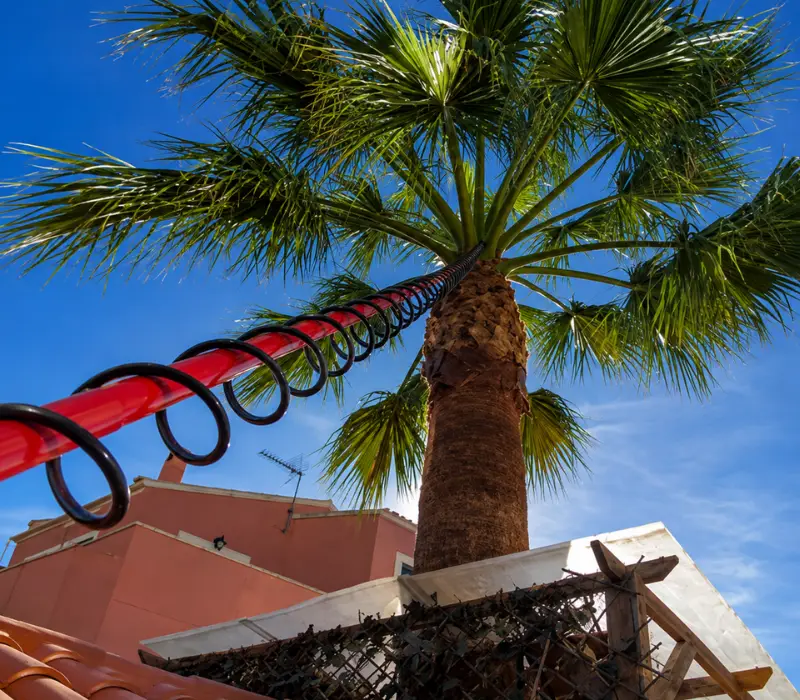
Treating the red palm weevil: endotherapy
The most effective treatment currently available for the red palm weevil is plant endotherapy. It involves injecting the plant-protection product directly into the palm tree's vascular system, distributing it internally up to the crown where the larvae are found.
The advantages of endotherapy over external spraying are clear:
- Systemic action: the product reaches the entire interior of the palm tree
- Greater effectiveness at intermediate stages of infestation
- Lower environmental impact: there is no product drift to the outside
- Can be applied at any time of year
Endotherapy requires regulated plant-protection products. It may only be applied by companies holding an official plant-health licence — not every gardening service is authorised to carry it out.
Prevention: protocols for healthy palm trees
The best strategy against the red palm weevil is prevention. Palm trees that have never been infested, or that are in high-incidence areas, benefit from regular preventive protocols that include applying systemic products before the insect can lay its eggs.
In the coastal areas of Mallorca — Calvià, Alcúdia and the Palma seafront — where weevil pressure is highest, we recommend combining annual pruning with a preventive endotherapy treatment at each visit.
Is your palm tree showing signs of the red palm weevil?
Don't wait. The sooner you act, the better the chances of saving the palm tree. The technical visit is free.
See our endotherapy serviceFrequently asked questions about the red palm weevil
Can a palm tree with red palm weevil be saved? It depends on the stage of infestation. Palm trees caught at an early or intermediate stage have a genuine chance of recovery with endotherapy treatment. Those whose crown has been completely destroyed cannot be saved.
Is endotherapy treatment safe for other trees and plants? Yes. The products are applied directly into the palm tree's vascular system and are not dispersed to the outside, which minimises the impact on surrounding vegetation and beneficial insects.
How much does the treatment cost? The price depends on the number of palm trees, their size and the state of infestation. The technical visit is free — get in touch with us for a no-obligation assessment.